Why do avoidant partners withdraw after intimacy?
Avoidant withdrawal after intimacy is distance that follows a close moment rather than a problem in the relationship. People asking why avoidant partners withdraw sexually or emotionally after a close night are usually describing the same sequence: an evening that went well, then a stretch of distance with no visible cause. In avoidant attachment the retreat tends to follow the closeness rather than a problem, which is why it lands as inexplicable.
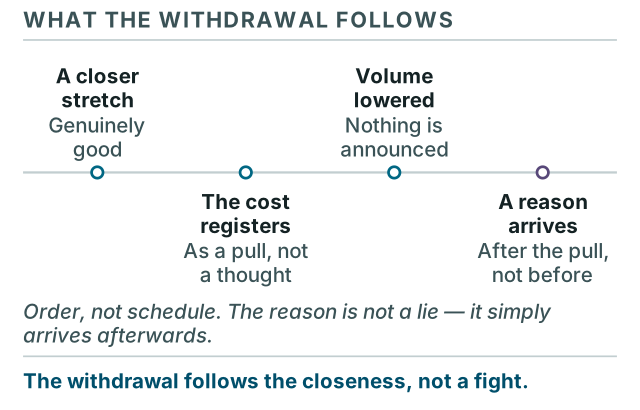
That sequence has a name in attachment writing. Closeness rises, the exposure that comes with it rises too, and distance brings the temperature back down. The distance is doing a job. It is not a message about the person on the other side of it, even though it is received as one.
Two things make this particular version harder to read than other kinds of pulling away. The first is that the closeness in question was often physical, so the retreat gets interpreted through the most personal lens available: my body, my desirability, something I did. The second is timing. The distance arrives on the good week, not the bad one, so the ordinary explanations do not fit and the search for an unusual one begins.
The frame this page works in is descriptive. Avoidant attachment names a way of handling closeness — space used as regulation — not a diagnosis, a character verdict, or a label that belongs on any particular person. Nothing here reads a mind. It describes behaviour that people who lean avoidant report about themselves, and that partners report noticing from the outside.
One boundary before the rest. This page is about a relational pattern. It makes no claims about bodies, desire, or anything medical, because those are a different subject with different expertise behind it, and the honest version of this page stops before it.
Why does closeness make an avoidant pull away?
Closeness registers as pressure in this pattern because being known creates an obligation that cannot be returned to its box. A shared night, a confession, a moment of being wanted: each one raises how much a person stands to lose and how visible their needing is. Distance afterwards restores a balance that intimacy disturbed.
The mechanic underneath is straightforward once it is named. Someone who learned early that depending on another person was unreliable did not stop needing closeness; they built a way of having it that keeps an exit within reach. Space is that way. It is not a punishment or a strategy, and people who recognise it in themselves describe noticing the discomfort long before they can name the cause.
Physical intimacy concentrates that exposure particularly sharply. It is unguarded, it is wordless, and it comes with an implication about what the relationship now is. Kissing carries a smaller version of the same charge, which is why some partners notice the flinch first in ordinary affection rather than in anything bigger. Nothing about this requires the moment to have gone badly. The pull-back can follow the moments that went best.
There is also a quieter trigger that has nothing to do with what happened in the room: what the closeness now implies about the future. A very good night can arrive with an unspoken clause attached — that this is now the standard, that the frequency of contact resets upward, that a question about what we are is coming. The clause is usually imagined rather than stated, and it does its work anyway.
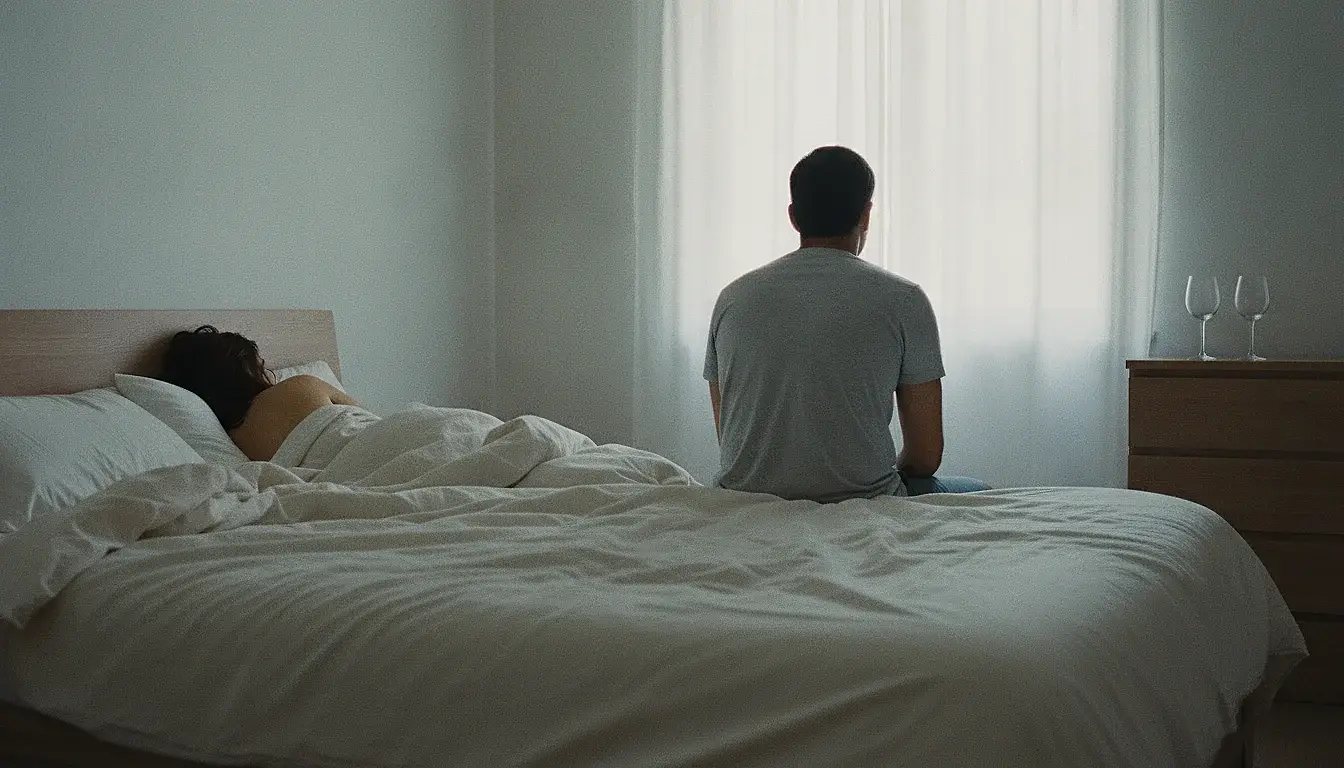
Then the aftermath adds its own pressure. Having been that open, a person becomes aware of how they were seen, and the awareness itself is uncomfortable enough to want relief from. Partners describe the retreat starting the next morning rather than the same night — not during the closeness, but once there was room to notice it.
| Stage | What happens inside the pattern | What a partner sees |
|---|---|---|
| Closeness | A moment of openness, physical or spoken, that is genuinely wanted | A good night; more warmth than usual |
| Exposure | Being known raises the stakes and makes needing something visible | Nothing yet — this stage is internal |
| Deactivation | Discomfort registers as an urge for space rather than as a feeling about the partner | A shift in tone with no cause attached to it |
| Distance | Fewer messages, a busy week, less initiation, conversations kept practical | Withdrawal that reads as rejection |
| Relief | Pressure drops; the relationship stops feeling like an obligation | Silence, often interpreted as indifference |
| Re-approach | The pull toward connection returns once the cost feels manageable | Contact resumes as if nothing happened |
The full mechanism, including what starts it in situations that have nothing to do with intimacy, sits on the deactivation hub. This page covers the version where the trigger is the closeness itself.
What do partners notice when an avoidant withdraws?
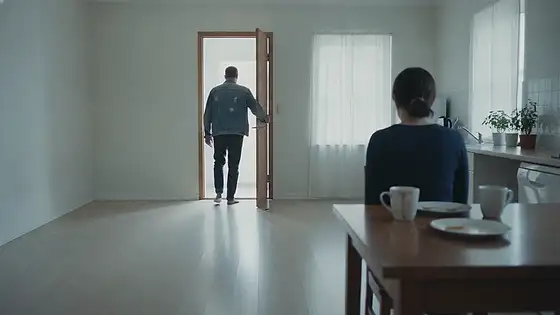
Partners describe a before and an after that do not match. Before: initiation, ease, unusual openness, sometimes a conversation that went further than either person expected. After: a flatter tone, delayed replies, plans that get made later than usual. The contrast is what people notice, more than any single behaviour in it.
In the run-up. The closeness that precedes a retreat is often notably good rather than strained. For instance, partners recall an evening where something was said out loud for the first time, or a weekend with no distance in it at all. That quality is the reason the retreat is so hard to categorise: there is no argument to point at.
In the hours after. Descriptions cluster around a change in register more than an absence. The person is still present and still civil; what drops out is the warmth. In practice, humour gets flatter, conversation moves to logistics, physical contact becomes brief. Partners say the room felt different before anyone said anything.
Over the following days. The visible version arrives here: slower replies, a schedule that fills up, evenings that go to work or friends, initiation dropping away. Direct questions get answered with reassurance that does not settle anything — nothing is wrong, they have just been busy.
Around affection. Some partners notice the retreat first in small gestures rather than big ones. For example, being reached for casually, a kiss in passing, an arm around the shoulder while someone is doing something else: these are the unplanned kinds of closeness, and unplanned closeness offers no time to prepare for it.
On the way back. The return is gradual and rarely explained. Contact resumes, a plan gets suggested, the warmth reappears without a bridge sentence connecting it to the week that just happened. Partners describe this as the most confusing part, because it seems to require pretending the distance did not occur.
Telling this apart from fading interest is the question underneath most of the searching, and the honest answer is that a single quiet week does not distinguish them. What tends to differ is the shape over time: a retreat that follows closeness eases once the pressure drops, and contact resumes without anyone going to fetch it. Interest that is draining away tends to keep draining, closeness or not.
Partners also describe what makes the distance longer rather than shorter. Pursuing it with more messages, asking what is wrong repeatedly, or turning the retreat into a conversation about the relationship’s future all add the exact input the pattern is retreating from. What people report working better is unremarkable: keeping their own week intact, staying reachable without chasing, and raising the pattern later at a calm moment rather than in the middle of it. None of that is a technique for producing a return. It is a description of what tends to leave both people less depleted while the retreat runs its course.
What makes the sequence so costly to be near is not the distance itself but the reading that happens during it. A week of quiet with no stated cause is an invitation to test theories, and the theories available to a partner are mostly about themselves. That is the part worth interrupting, and the reason a description of the pattern helps at all.
The letters
An occasional email about the pattern, and nothing else
That did not go through. Nothing was saved and nothing was sent — try the address again, or write to us directly and we will add it by hand.
- What arrives
- A note when a page here is rewritten or a new one goes up, with one line on what changed.
- What does not
- Assessments, quizzes, coaching offers, anything that claims to tell you what someone else is.
No spam, ever. Unsubscribe anytime.
Two neighbouring questions come up constantly here and have their own pages. How this pattern behaves across a whole relationship rather than a single week sits in avoidant attachment in relationships. Whether warmth expressed in actions rather than words means anything is covered in signs an avoidant loves you but is scared. And raising any of it without setting off the retreat is its own skill, described in how to communicate with an avoidant partner.
What it is not
What this page does not claim
This is a description of a relational pattern, written for someone trying to make sense of a sequence. Several things it might be mistaken for are not being claimed, and the limits matter more than usual on this subject.
- Not a verdict on attractiveness
- The retreat in this pattern tracks how exposed a moment felt, not how the other person looked or performed. Reading it as a rating is an interpretation partners reach for early, and the one this page supports least.
- Not evidence of someone else
- Distance after closeness is compatible with many stories, and infidelity is one that partners reach for early because it explains the timing. It explains it no better than the pattern does, and suspicion is a poor tool for finding out.
- Not a medical claim
- Nothing here describes desire, bodies, or anything physiological. Those questions belong to clinicians, and a page about attachment behaviour has no standing to answer them.
- Not a diagnosis of anyone
- Attachment patterns are a way of describing behaviour, borrowed from research rather than from a clinic. Nothing here is a condition anybody has, and no label is being fixed to a partner who never asked for one.
- Not a technique for restoring closeness
- There is no script here for bringing someone back into a warm week on schedule. Methods sold that way work through pressure, and pressure is the input that produced the retreat.
- Not a timeline
- We publish no figure we cannot trace to a named, dated source, so there is no duration for how long a retreat lasts and no share for how often it happens. Invented precision would be worse than none.
What we do stand behind
- The sequence, described plainly
- Closeness, exposure, distance, relief, return — named as behaviour rather than as adjectives attached to a person.
- The point where we stop
- Where the question turns clinical or turns to safety, we say so on the page instead of answering it. Our reading list is on the sources page.
One more distinction is worth making, because it is the one people most want settled: this pattern does not tell you whether a relationship is working for you. Distance that is explainable can still be more than someone wants to live with, and understanding why it happens does not oblige anybody to accept it. Those are separate questions, and the second one is about you rather than about the pattern.
Where this page stops
This page describes a behavioural sequence some people notice around intimacy. It cannot tell any particular reader what their partner is feeling, what caused a specific quiet week, or whether the same pattern will show up again. Avoidant attachment is a descriptive frame, and it is not the only reason a person keeps distance after a close moment.
Where the question is about desire, physical health, pain, or anything about how a body works, this is the wrong kind of page and a doctor or a qualified therapist is the right place to take it. The same applies if intimacy in the relationship has involved pressure, coercion or fear rather than distance — that is a safety question, not a pattern question, and it needs a professional rather than an article.
The wider mechanism is covered on the deactivation hub. Our sources page lists the reading behind it.