Dismissive avoidant is the adult attachment pattern where self-reliance is the main way of feeling safe. People arrive at dismissive avoidant from two directions. Either a description of the pattern sounded uncomfortably close to their own way of handling relationships, or it sounded like the person they are with, and they want to know whether the label explains anything useful.
This section of the guide holds the term itself: what dismissive avoidant attachment means, how the phrase is used online compared with how it is used in the attachment literature, and which page here covers which part of the pattern. Everything below describes behaviour. None of it places a person in a category, and no page can tell you what a specific person feels.
What is a dismissive avoidant?
Dismissive avoidant describes an adult pattern in which independence is the main source of steadiness, and closeness is managed rather than leaned into. Warmth is possible and often real. What changes the picture is what happens once the relationship starts asking for more of it: the movement goes toward space instead of toward repair.
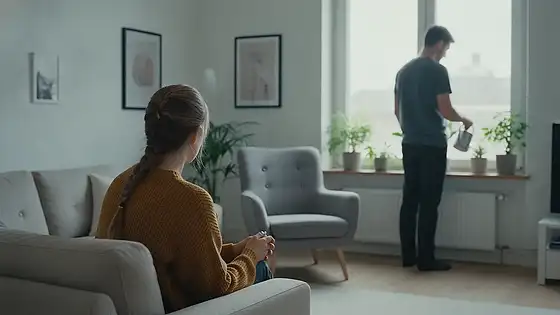
The shape shows most clearly in what happens to a request. For instance, in a relationship without this pattern, a partner saying I need more from you raises the temperature and then the couple work it down together. In this pattern, the same sentence lands as a demand on a system that is already at capacity, and the reflex is to reduce contact until the pressure drops. Nothing is announced. The answers get shorter, plans get vaguer, and the person genuinely believes they are being reasonable rather than distant.
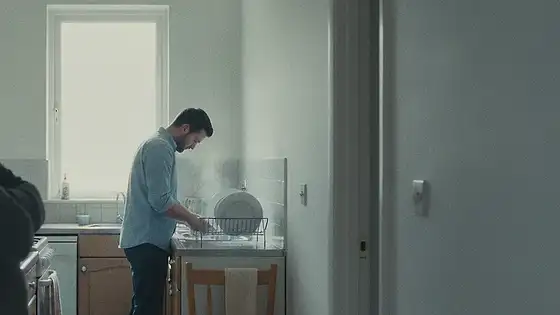
That belief matters, because it is the part partners find hardest to accept. From the inside there is no drama. There is a slight relief when the evening ends, a sense that everything is fine, and mild confusion about why the other person is upset. From the outside the same evening reads as a door closing without a sound.
The pattern is not confined to romance, which is why the phrase avoidant attachment in adulthood turns up alongside the relationship searches. For example, the same preference shows up in a friendship that runs for years on practical help and never on confiding, in a family where everyone is fond of each other and nobody says so, and at work in the person who absorbs a difficult project rather than asking for cover. What links those situations is not coldness. It is that being depended on is comfortable and depending on someone else is not.
Something else belongs here before the definitions. This way of relating developed for a reason and worked at the time, which is covered separately in where the pattern comes from. It also varies by relationship: the same person can be markedly more available with one partner than with another, which is why a flat statement that someone is dismissive avoidant tends to be wrong in the details even when it is roughly right about the shape.
Which traits do people describe most?
The recurring traits, written as habits rather than as a checklist, look like this. High self-sufficiency, including in situations where help would be reasonable. A long delay between noticing a need and saying it, if it gets said at all. A preference for solving difficulty alone and reporting the outcome later. Discomfort when a conversation turns from events to the relationship itself. Past relationships described in flat, summarising terms with the detail missing. Space taken quietly rather than negotiated.
None of these is proof of anything on its own, and each of them describes people who would never recognise themselves in this guide. A pattern is a set of tendencies that repeat across relationships and across time, not a single behaviour caught once during a bad month. How the pattern shows up works through the recognisable signals in detail, and avoidant behaviour covers the specific actions people ask about most.
Where does the word dismissive come from?
Dismissive entered this vocabulary as a description of how an adult talked about their early relationships: briefly, positively in the abstract, and with the specifics thinned out. It named a style of account given in a research setting. It never meant rude, cold, or contemptuous, and it was never a claim about someone’s worth as a partner.
The phrase left that setting and became shorthand. Online it now does several jobs at once. It works as an identity people adopt for themselves, sometimes as a way of explaining a habit and sometimes as a way of retiring from having to change it. It works as a verdict handed to an ex after a relationship ends badly. It works as a prediction engine, promising that if you know the label you know what the person will do next month.
Things get lost in that drift, and each loss costs the reader something real.
The first is that a pattern is a description of behaviour under specific conditions, not a fixed property of a person. The same individual can show it strongly in one relationship and barely at all in another, depending on how much emotional access the relationship asks for and how safe it felt at the start.
The second is that the label explains less than it appears to. Knowing that a partner’s withdrawal fits a recognised pattern can stop you reading it as evidence that you are unlovable. It cannot tell you whether that person will change, whether they want to, or whether the relationship is right for you. Those are separate questions, and the label answers none of them.
The third is that people are not their strategies. Someone whose way of staying steady is distance still forms real bonds, still grieves them, and still notices what you need — often while saying nothing about it. Our sources page sets out what this guide is built from and where the language originally comes from.
One practical note about where people meet the phrase. It often turns up first in community writing: forum threads, comment sections, long posts by people describing their own withdrawal or their partner’s. That material is worth reading for one thing and not for another. In practice, it is unusually good at supplying the texture — the specific sentence that ended the conversation, the exact excuse used to leave early — because people remember their own evenings better than any summary can. It is unreliable the moment it turns to prediction, timelines, or what a partner is secretly feeling, because nobody in the thread has access to that.
The phrase emotionally avoidant deserves a line of its own here. It is an everyday description of behaviour, not a category from the literature, and it gets applied to anyone who is quiet, private, or slow to open up. It fits people with no attachment pattern involved at all.
Are dismissive avoidant and avoidant attachment the same thing?
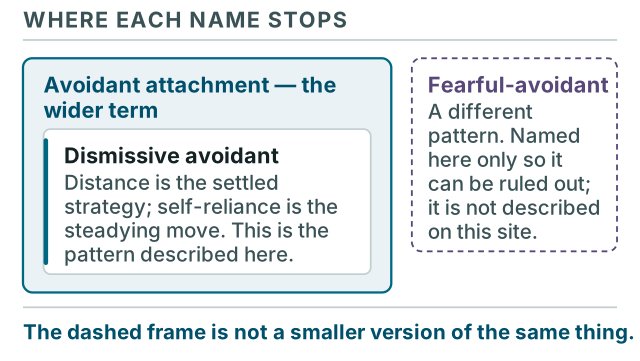
Not quite: one of these two names contains the other. Avoidant attachment is the outer one, covering any way of handling closeness that works by adding distance to it. Dismissive avoidant is the inner one: the version built on self-reliance, where distance is the settled arrangement rather than a reaction to fear of the other person. In everyday writing the two phrases are used interchangeably, which is exactly why readers end up with two tabs open and a suspicion they are reading about two different things.
This is not a comparison of attachment patterns against each other. It is a map of names that circle the same territory, which is a different and more boring problem — and the one that actually sends people looking for a definition twice.
| Term | What it actually names | Covered here |
|---|---|---|
| Avoidant attachment | The umbrella term for handling closeness by adding distance | Yes, as the wider frame |
| Dismissive avoidant attachment | The version built on self-reliance; distance as the settled strategy | Yes, this is the subject of this guide |
| Dismissing attachment style | Older research wording for the same category | Yes, same thing under an earlier name |
| Emotionally avoidant | Everyday phrase for the behaviour, not a category from the literature | Used descriptively, never as a label for a person |
| Fearful-avoidant, or disorganised | A different pattern, where closeness is wanted and feared at once | No — this guide does not describe it |
That last row is worth stating plainly rather than leaving to a table: fearful-avoidant, sometimes called disorganised, is a separate pattern, and this guide does not describe it. If the descriptions here keep half-fitting, you are probably reading about the wrong pattern.
The question are there types of avoidant attachment points to this same split. The literature separates the dismissive pattern from the fearful-avoidant one. Beyond that split, the sub-types that circulate online are vocabulary rather than an established distinction, and we do not repeat them here as though they were settled.
There is also a practical answer to which of these should I read first. If you arrived with a person in mind, the names matter less than the behaviour, and the pages on signs and on behaviour will be more use than any definition. If you arrived because you recognised yourself, the name matters more, mostly because it makes it possible to look at the habit without treating it as a character defect. Either way the term is a starting point for description, not the conclusion of one.
The parts of the pattern
The rest of this section splits the pattern into the questions people actually arrive with: how to recognise it, what sets it off, what it does inside a relationship, and how care looks when it is not expressed the way a partner expects. Each page below stands on its own, and each one starts from behaviour rather than from the label.
How the pattern shows up — the recognisable signals, and the harder question underneath them: how to tell a genuine need for solitude from a pattern of managing closeness through distance.
Avoidant behaviour — the specific actions people search for, described as what they do rather than as what they supposedly prove about someone.
Where the pattern comes from — how self-reliance gets learned early, why it was a sensible adaptation at the time, and why blaming a childhood rarely helps an adult relationship.
What sets the pattern off — the situations that reliably raise pressure, and how harmless they can look from outside: a plan for next year, a question about feelings, an unusually good evening.
The pattern in men and in women — why the same pattern gets read as strength in one person and coldness in another, and what that difference in reading does to both of them.
Care that does not look like care — how attachment shows up when it is expressed through reliability and practical effort rather than through words, and where wishful reading of small signals starts.
Inside a relationship — what the pattern does to a partnership over time, what tends to work, and what keeps failing for reasons neither person intended.
Conflict avoidance — why disagreement so often ends in a flat, reasonable silence, and what happens to the unresolved part afterwards.
The mechanism sitting under these pages has its own name and its own section: deactivation, the process by which closeness that has just gone well is followed by a pull toward distance. We link to it rather than retelling it, so that the explanation stays in one place and stays consistent.
How to use the section depends on which side of it you are standing. A partner tends to get the most out of the pages on triggers, on what happens inside a relationship, and on care expressed through action rather than words, because those are the ones that make otherwise baffling evenings legible. Someone reading about themselves does better starting with the signs page and the one on conflict, where the behaviour is described closely enough to be recognised in the moment it happens rather than a week later.
The letters
One letter a week, on the pattern rather than the label
That did not go through. Nothing was saved and nothing was sent — try the address again, or write to us directly and we will add it by hand.
- What arrives
- A note when a page here is rewritten or a new one goes up, with one line on what changed.
- What does not
- Assessments, quizzes, coaching offers, anything that claims to tell you what someone else is.
No advice on changing another person. Unsubscribe anytime.
What this guide does not cover
What we don't do
Boundaries stated once, so that no page here has to pretend to more than it has.
- We do not diagnose
- Attachment patterns are descriptive frames, not clinical categories, and reading a page is not an assessment. Nothing here identifies a condition in you or in anyone you know.
- We do not describe the other attachment patterns
- This guide covers the dismissive-avoidant pattern. The wider map of attachment patterns, and the pattern that online explanations tend to pair with this one, are outside its scope and are not covered here.
- We do not predict a particular person
- No page will tell you whether someone will come back, change, or commit. A pattern describes tendencies across people; it makes no claim about the one you are thinking of.
- We do not write scripts for changing a partner
- There are no sentences here designed to produce a reaction in someone else. Communication pages describe how to say your own part clearly, and stop there.
- We do not publish figures
- You will not find percentages for how common this pattern is on any page of this site. The numbers that circulate could not be traced back to a source we had actually read, so we print none.
What we do stand behind
- Described by what someone did
- Actions rather than a character sketch: what a person did with a plan, with a question, with an evening.
- A dated page
- Every page carries the month it was last checked, so you can see how old the wording is before you rely on it.
- A frame with an end on it
- The point where this vocabulary stops explaining anything is marked, rather than being written past.
Where this page stops
This guide describes a pattern of behaviour in ordinary relationships. It is not a clinical resource, and it cannot tell the difference between an attachment pattern and something that needs proper assessment. If withdrawal comes with sustained low mood, if it followed a frightening event, or if a relationship involves fear rather than distance, that is a question for a qualified professional rather than for a website — and it is worth asking sooner rather than later.
If you are the person recognising yourself here, the useful next step is rarely the label. It is noticing the moment the pull toward space arrives, before the plan to reduce contact starts looking like a good idea. The wider frame sets the pattern in context, and the sections above take it apart one question at a time.