What changes when the pattern has had years?
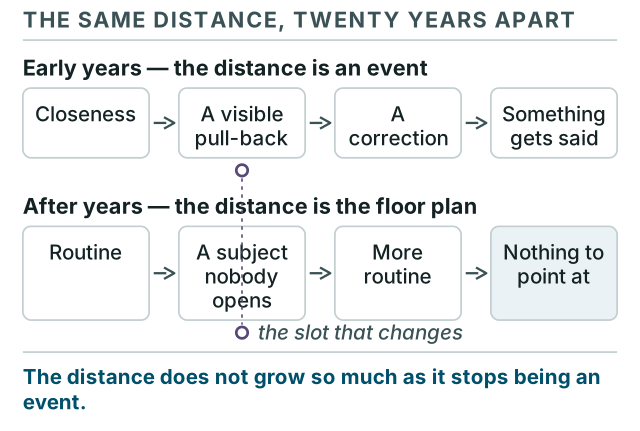
A dismissive avoidant husband is a spouse who steadies closeness with distance, and after years that distance is built into the shape of ordinary life rather than produced. Being married to one looks different from dating one, because the pattern has had years to settle into a shape that no longer announces itself. The pull-backs that felt dramatic early on stop being events and become architecture: routines that keep enough distance built in that nobody has to withdraw from anything.
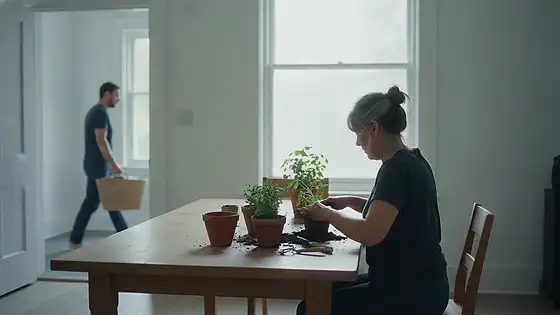
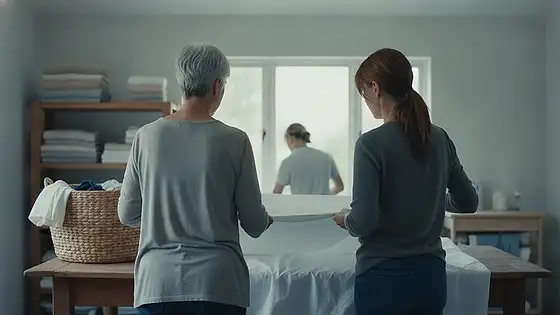
What people describe changing is the volume, not the mechanism. For example, in early dating, distance has to be produced — a message left unanswered, a weekend claimed back, a conversation deferred. In a long marriage, distance is already installed. Different bedtimes, different rooms, a commute, a hobby that runs on its own schedule, work that reliably expands.
This is why long-married partners often say the trouble is hard to point at. Nothing is being done to them this week. The pattern has moved from the foreground, where it could be argued about, into the structure of ordinary life, where there is nothing specific to raise.
The second change is that both people have adapted. A partner who once asked directly for more closeness has usually learned which requests produce contact and which produce a quieter house, and has stopped making the second kind. That editing happens gradually and is rarely noticed while it is happening.
A note on who this describes. The wording of this page follows the phrase readers arrive with — dismissive avoidant husband — not because the pattern belongs to one gender. It is described in wives, husbands and long-term partners alike, and readers who came looking for an avoidant girlfriend or wife tend to recognise the same architecture: reliable presence, thin disclosure, and conflict that closes rather than escalates. Nothing below depends on which of them is which.
Where does the distance show up in a long marriage?
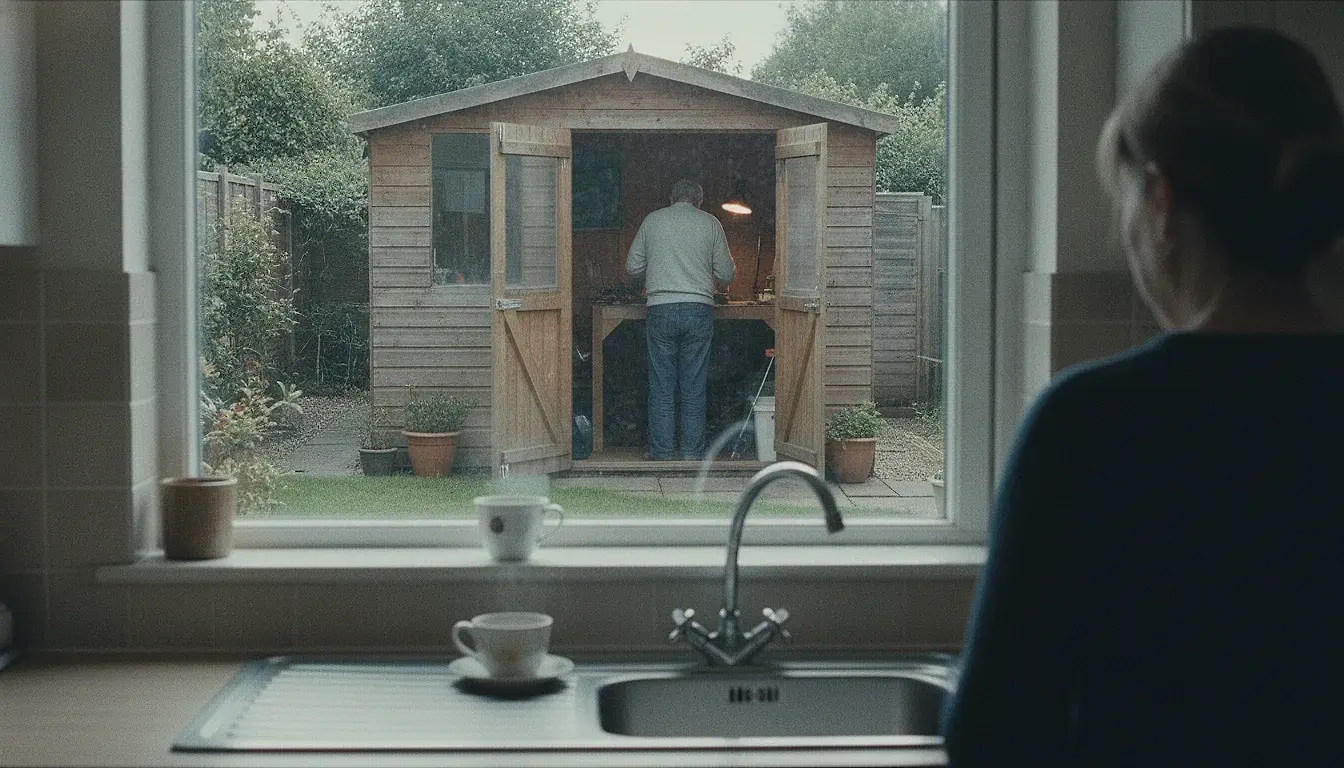
In a long marriage the pattern concentrates in a small number of places rather than spreading across everything. Shared logistics usually run well. What thins out is unstructured time together, disclosure about internal states, and any conversation whose purpose is the relationship itself rather than a decision that has to be made.
Conflict is the clearest of these. Long-term partners rarely describe shouting matches. For instance, they describe a subject being raised, a short flat answer, and then a closed door — a walk, a screen, a job that suddenly needs doing. The disagreement does not resolve and does not escalate. It gets filed. Weeks later the same subject arrives again in the same shape.
The second place is repair. For example, after an ordinary bad evening, the next morning tends to arrive normal, warm even, with no reference to what happened. For one person that is generosity: the thing is over, why reopen it. For the other it can register as the evening being absorbed rather than settled, which is how a list of unfinished subjects builds up over years without a single argument being lost.
The third place is intimacy, in both senses. Physical and emotional closeness often follow the same curve — steady when it is routine, thinner after the moments that were unusually close. The mechanism behind that timing is described separately in why avoidant partners withdraw after intimacy, because it is an easily misread sequence.
Children change the arithmetic without changing the mechanism. Parenting supplies an enormous amount of legitimate work, and a partner who finds emotional conversation costly can be genuinely, visibly excellent at the work — present at every fixture, on top of every form, awake with a sick child. Families in this shape describe the practical load rising and the couple conversation shrinking in the same years, with nobody deciding that this should happen.
The other thing years supply is company. A long marriage has holidays, in-laws, a mortgage and a routine that make the absence of one particular kind of conversation easy to overlook for long stretches, until a stretch arrives without the scaffolding — an empty house, a recovery, a redundancy — and the quiet becomes audible again.
| The behaviour | Early on it looks like | After years it looks like |
|---|---|---|
| Needing recovery time alone | A cancelled weekend, noticed and discussed | A hobby, a shift pattern or a room that nobody questions |
| A difficult subject raised | An argument that ends unresolved | A short answer and a door closing; the subject returns unchanged later |
| Affection | Warmth in bursts, then a quiet stretch | Practical care that is constant and rarely spoken |
| A partner asking for more closeness | A direct request, sometimes a fight | A request that stopped being made some years ago |
| Repair after a bad evening | An apology or a stand-off | A normal morning with no reference to the night before |
| Talking about the relationship | Postponed until things calm down | Not a category of conversation this household has |
Does a dismissive avoidant husband still show care?
Care is rarely absent in a long marriage with this pattern; what partners describe more often is care that has been routed entirely through practical channels: the car maintained, the bills handled, the family calendar held, the difficult relatives managed, the sick child driven at an unreasonable hour without complaint. Reading the pattern as an absence of care is the common misreading.
That routing is worth taking literally rather than treating it as a substitute for something better. For a person who finds emotional exposure costly, doing things is not a lesser language. It is the register in which commitment can be expressed without the exposure that the pattern reads as risk. Long-married partners say the reliability was never in question, and that this is exactly what made the silence hard to complain about.
The difficulty is that the two registers are not interchangeable for the person receiving them. A partner who needs to be known does not get that need met by being provided for, however faithfully. Both statements are true at once: the care is real, and the specific thing being asked for is still not arriving. Long marriages get stuck in the space between those two facts, because each person has evidence and neither has a grievance that survives being said out loud.
What tends to move the conversation, when it moves at all, is naming the register rather than the shortfall. “You show up for everything and I still do not know what your week was like” describes a pattern. “You do not care” describes a person, and it is both inaccurate and reliably followed by a closed door.
The letters
A note for the long view, sent now and then
That did not go through. Nothing was saved and nothing was sent — try the address again, or write to us directly and we will add it by hand.
- What arrives
- A note when a page here is rewritten or a new one goes up, with one line on what changed.
- What does not
- Assessments, quizzes, coaching offers, anything that claims to tell you what someone else is.
No spam, ever. Unsubscribe anytime.
Living with the parts that do not change
Some of this shifts over time and some of it does not, and the honest position is that nobody can tell in advance which is which in a particular marriage. What can be said is that the shifts people report tend to be modest and specific — a subject that becomes speakable, a shorter recovery after conflict — rather than a change of temperament. Whether a pattern can move at all is covered in can a dismissive avoidant change.
It is also worth separating two things that get fused in long marriages: what a partner does, and what a partner is understood to mean by it. Years of interpretation build up around the same behaviours, and the interpretation is often heavier than the behaviour. A door closing at the end of a hard conversation means the conversation exceeded what the person could hold in that moment. After enough repetitions it starts being received as a statement about the marriage, which it usually is not, and that reading is the part a partner has some access to.
The part that belongs to the partner reading this is narrower than the internet suggests, and it is not a technique. It is the question of what a person needs in order to live well, asked without reference to what the other one is likely to do. That question has answers that do not depend on anyone changing: friendships that carry the disclosure a marriage is not carrying, work that matters, a life that is not organised around waiting.
What this page does not do
This page describes how a pattern tends to look on a long horizon. Here is what that description cannot be used for.
- No advice about staying or leaving
- We do not tell readers what to do with a marriage. That decision belongs to the people inside it, depends on things we cannot see, and is not made better by an article with an opinion about it.
- No assessment of your partner
- Nothing here evaluates a specific husband, wife or spouse. We describe behaviour that partners commonly recognise; recognising a description is not the same as a person being explained by it.
- No diagnosis
- Attachment writing supplies a description, not a finding. A marriage that matches one has been recognised in a pattern, not told anything about anybody's mental health.
- No prediction
- We do not write that a pattern eases after a certain stage of life, or that a partner will open up once the children leave. Forecasts about another adult's behaviour are guesses, and the confident version of that guess is how this category takes advantage of people who are waiting.
- No numbers
- There is no proportion here for how many marriages like this last, change, or end. The figures that circulate on the subject could not be followed to anyone who measured them.
- No scripts with a promised result
- There is no wording that converts a closed door into a conversation. Approaches sold that way run on pressure, and pressure is the input the pattern withdraws from.
What we do stand behind
- Sequences, not character
- What happened, in what order, on a specific evening — rather than a summary of what a husband or wife is like.
- Gaps marked, not filled
- The places a description cannot establish anything are marked as such instead of being written over. The reading list sits on the sources page.
Where this is no longer a pattern question
There is a line where none of this material applies, and it matters more here than anywhere else on the site, because a long marriage makes it easier to explain things away by habit. If a partner is controlling money, movement, contact with family or friends, if there is intimidation, coercion or any physical fear in the house, that is not distance and it is not this pattern. It is a safety question, and it belongs with a domestic abuse service, a doctor or the emergency services rather than with an article about attachment.
The same applies to anything clinical. Depression, sustained hopelessness, drinking that has grown, or a partner who has stopped functioning are not versions of avoidant attachment, and reading them through this frame delays the help that would actually address them. Those are questions for a clinician.
Between those extremes sits a smaller boundary: the point where a marriage needs a room with someone in it, not a page. Couples counselling exists for the conversations that stop being possible at home, and one person going alone is a legitimate use of it when the other is not willing.
Where this page stops
This page describes what long-term partners report recognising. It cannot say what is happening in a particular marriage, whether a specific person will become more available, or whether the distance in one household is attachment-shaped at all — illness, grief, overwork, culture and simple mismatch all produce similar surfaces. The wider material for partners sits on the partner hub, and how the pattern behaves across a relationship at any stage is described in avoidant attachment in relationships. The reading behind this page is on the sources page.